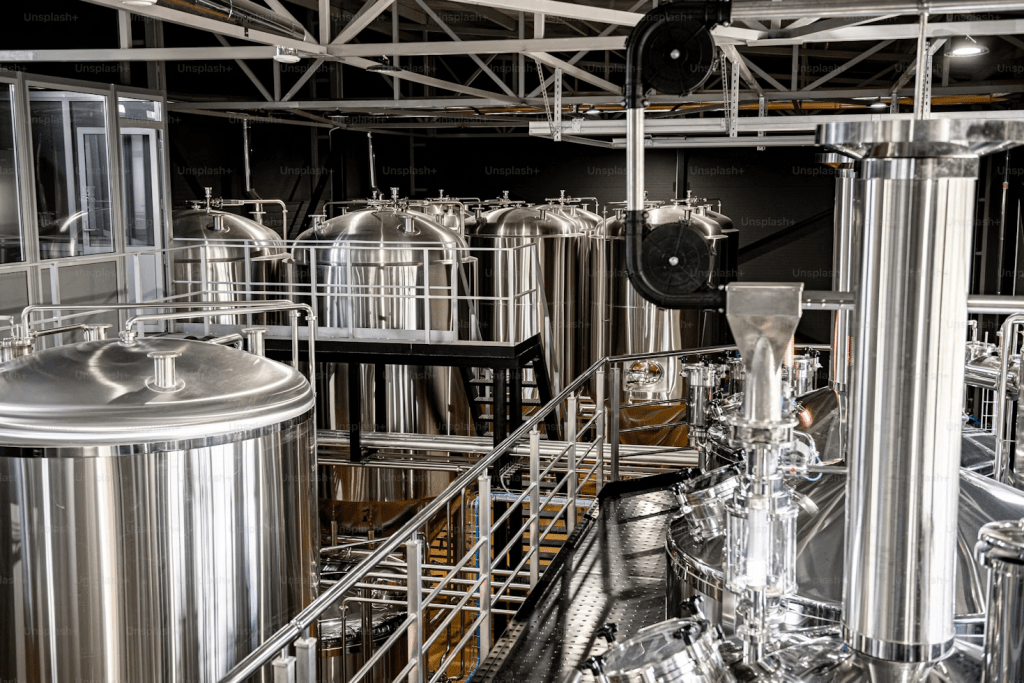
Water treatment plants — whether for drinking water, industrial process water, or sewage treatment — rely on extensive networks of pipework, fittings, valves, and instrumentation to move, filter, dose, and discharge water at various stages of treatment. The materials specified for these systems must be durable, corrosion-resistant, and compliant with relevant health and environmental standards.
Stainless steel has become the preferred material for many water treatment applications in Singapore, offering excellent corrosion resistance, long service life, and compatibility with the chemical dosing agents used in treatment processes.
Why Stainless Steel for Water Treatment?
Water treatment environments present several material challenges. Treated and untreated water can contain chlorides, biological agents, dissolved oxygen, and added treatment chemicals such as chlorine, alum, and ferric sulfate — all of which can corrode standard carbon steel piping over time.
Stainless steel’s passive oxide layer provides inherent corrosion resistance to most of these agents. Key advantages for water treatment applications include:
- Long service life — stainless steel systems routinely last 25–50 years in water treatment service, compared to 10–15 years for coated carbon steel in aggressive environments.
- Hygienic properties — the smooth internal surface of stainless steel pipes and fittings resists biofilm formation, an important consideration for drinking water applications.
- Chemical compatibility — stainless steel is resistant to the chemical dosing agents used in water treatment, including chlorine compounds and flocculants.
- Maintenance reduction — lower corrosion rates reduce the frequency of pipe replacement and the associated maintenance costs.
Grade Selection for Water Treatment
Grade 304 stainless steel is widely used in freshwater and treated water applications where chloride levels are low. For seawater intake systems, brine handling, or applications involving elevated chloride concentrations, grade 316 or 316L is required to provide adequate resistance to pitting corrosion.
For highly aggressive environments such as desalination pre-treatment systems or chemical dosing areas, higher-alloy grades such as duplex stainless steel may be specified for their superior corrosion resistance and higher strength.
Key Components in Water Treatment Piping Systems
Pipes
The pipe backbone of a water treatment plant must be sized for the flow rates and pressures involved in each treatment stage. Stainless steel pipes to ASTM A312 in various schedules are commonly specified, with seamless pipes used in higher-pressure applications and welded pipes for larger-diameter, lower-pressure distribution mains.
Fittings — Butt-Welded and Threaded
Stainless steel fittings — including elbows, tees, reducers, and caps — connect, redirect, and terminate pipe runs throughout the treatment plant. Butt-welded fittings provide a flush, crevice-free internal surface ideal for hygienic applications. Threaded fittings are used for small-bore instrumentation and chemical dosing connections.
Flanges and Valves
Flanged connections provide maintenance access points at critical locations such as pump inlets and outlet, filter vessel nozzles, and chemical dosing injection points. Valves — including gate valves for isolation, globe valves for flow control, and ball valves for quick shut-off — are specified throughout the treatment process.
Expansion Joints
Pumping systems in water treatment plants generate vibration that must be isolated from the connected pipework. Rubber expansion joints (EPDM for potable water, NBR for chemical service) are typically specified at pump connections, with metallic bellows used where higher pressures or temperatures are involved.
Sourcing Stainless Steel Components in Singapore
For water treatment projects in Singapore — whether for PUB infrastructure or industrial water management — sourcing components from a local supplier with a comprehensive product range and ISO 9001:2015 certification simplifies procurement and ensures material traceability. Suppliers offering fabrication services for custom fittings and expansion joints further reduce project complexity and lead times.
 Apec Metal & Engineering Pte Ltd
Leave a comment